
MAX PLANCK INSTITUTE’S GREAT APE
IN THE WILD
Face to Face with the Great Apes
For as long as I can remember, I’ve carried a childhood dream that bordered on fantasy which was to stand face to face with one of the last great apes. Movies, books, old wildlife specials all painted gorillas as both majestic and elusive. For a time, I wasn’t even sure they truly existed outside of imagination. But as I grew, and my love for Africa’s wilderness deepened, I learned the truth: they’re real. Not just in zoos or behind glass, but out there in the last wild places on Earth, just waiting for me to take the leap.
For over a decade, Gabon has sat at the top of our bucket list. Jessica and I both grew up fishing, and while we’ve been fortunate to explore some of the most untouched places on the planet due to our matching hobbies, this was something different. This was a calling, and one we decided to answer this year. With the incredible help of African Waters, we planned a two-week expedition through Loango National Park with a few Reeds Bespoke clients who were crazy enough to join us. We traveled by 4×4, boat, and foot to achieve a rare and humbling goal which was to spend a day with a family of gorillas. Not at a zoo, but deep in the jungle at the Max Planck Institute’s Great Ape research center in the heart of Gabon
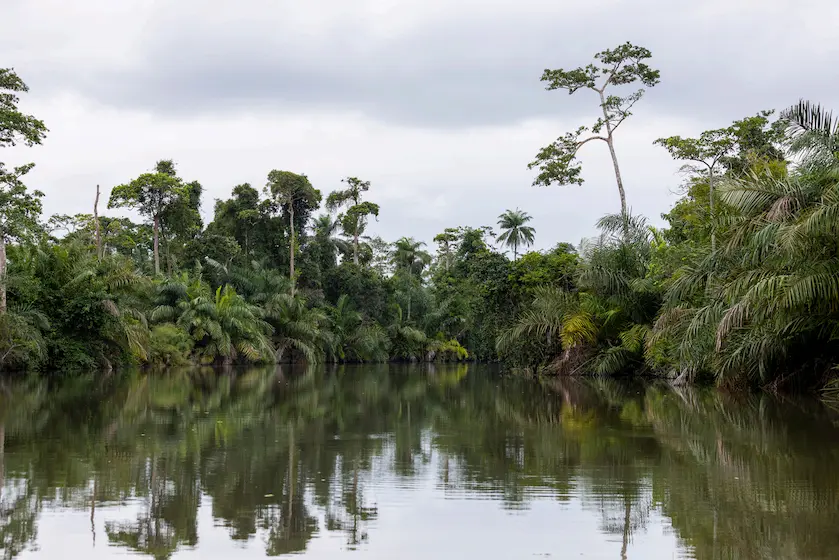
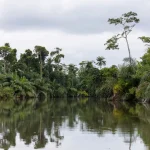
After several days traversing Loango’s raw, staggering beauty, the morning of the gorilla trek had finally arrived. The air felt thick with electricity, and either we were high from insect repellent or high on life. At dawn, we stepped onto a boat at the quaint Ndola Camp and cut through the southern edge of the Iguéla Lagoon. For two hours, we glided through a dreamscape of mist and mangroves to a place so quiet it you could hear your heart beat. This was no game drive, this was something closer to a pilgrimage.
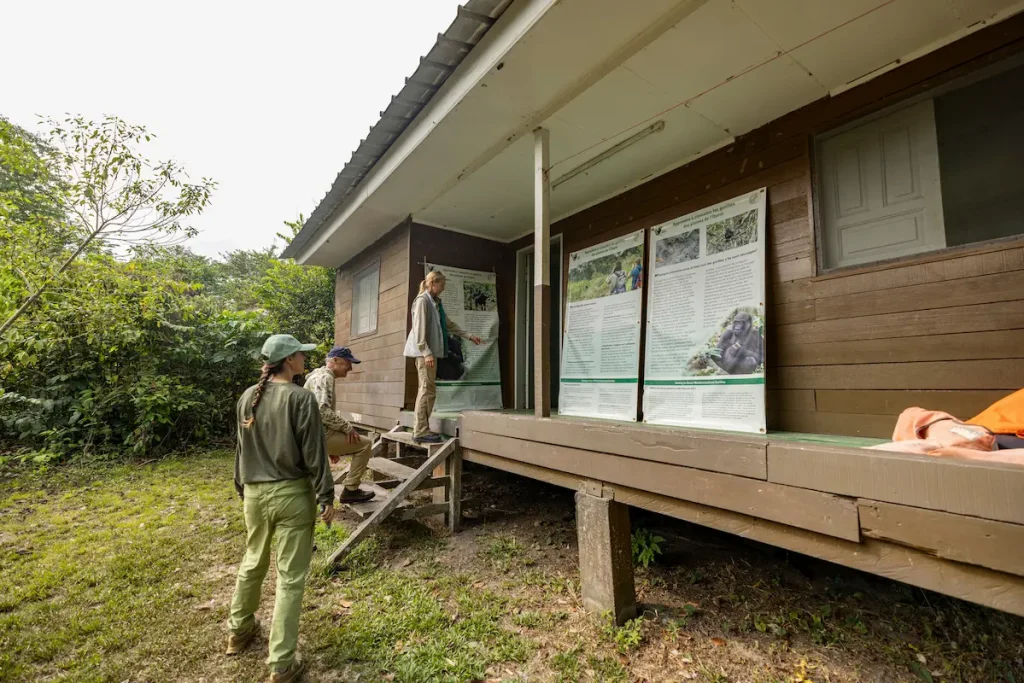
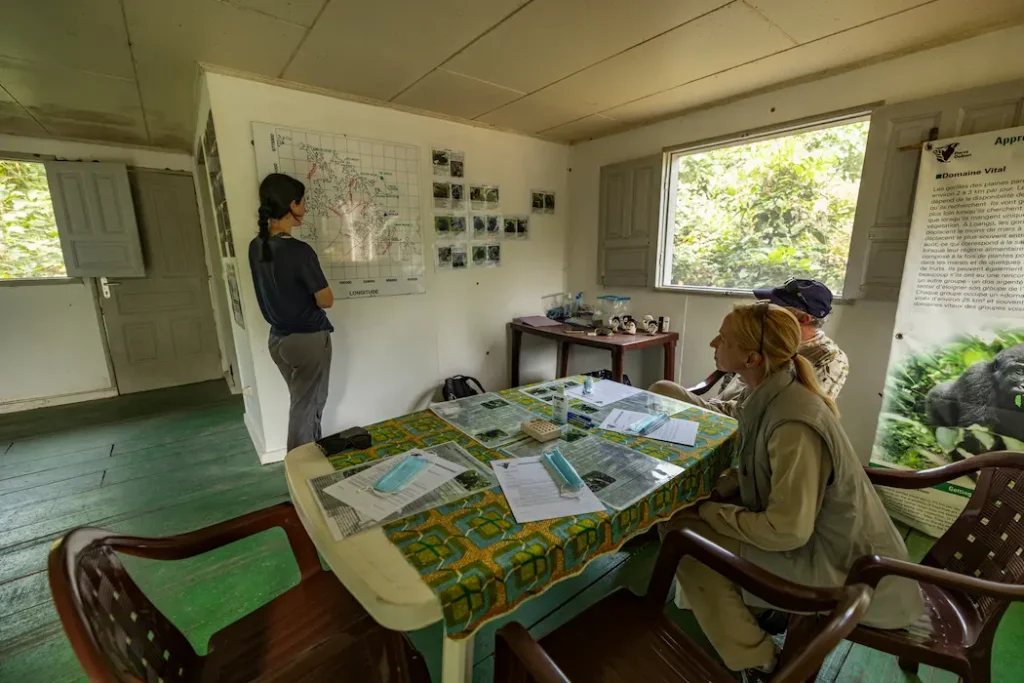
At a weathered dock, a research team met us: one primatologist and two local trackers. We were ushered into a small wooden outpost which is the heart of the program. The walls were filled with hand-marked maps, photos of individual gorillas, field notes were scrawled across whiteboards offering minor insight into the family we were about to experience, We learned that there is only one habituated group of western lowland gorillas in this part of Gabon. Encounters are limited to four guests, strictly monitored, and never guaranteed. This wasn’t a tourist hub with gorilla souvenirs, this was observation, and on the gorillas’ terms.
After a quick boat ride, we had reached our inlet into the jungle. We were provided with face masks and our researcher had instructed us to put the masks on when they find the family. In-between the time of receiving the masks, and climbing over two fallen trees, they had located the family.
Whispers rippled down the line: “They’re here.”
And just like that, it was time
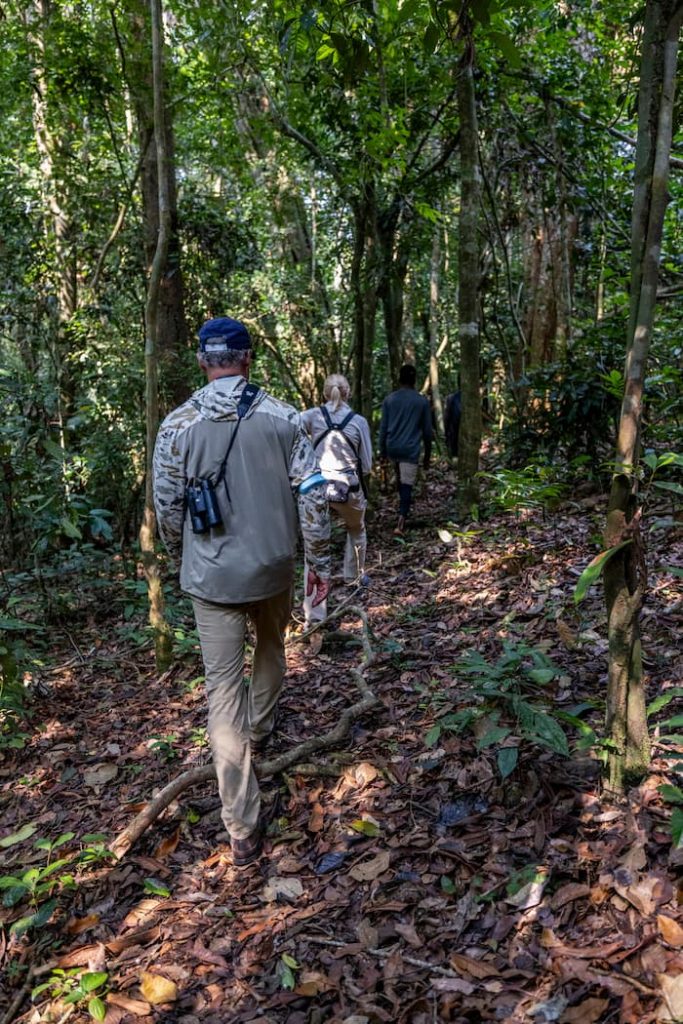
The terrain swallowed us quickly with dense vines, towering trees, and the faint smell of earth and rain enveloped us, We walked in silence, following a narrow elephant trail, eyes scanning, ears straining. The forest around us stirred, and we stopped abruptly. Branches cracked softly, and the leaves shivered. A low, deep groan emanated from the bushes 15 meters ahead of us. Not threatening, but loud enough to make its presence known. We squinted into the shadows, unsure whether what we saw movement or if the light was playing tricks with us.
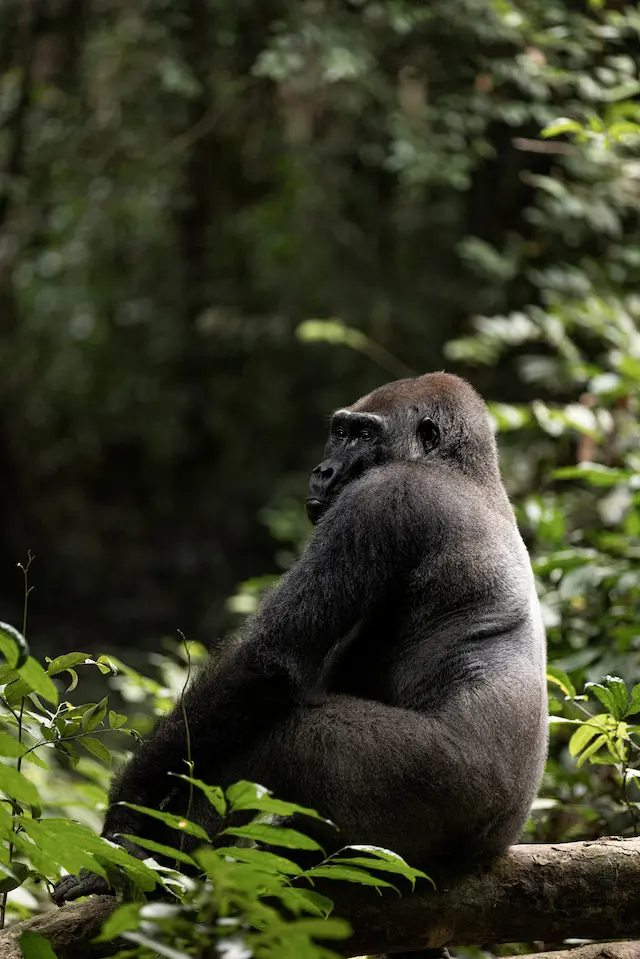
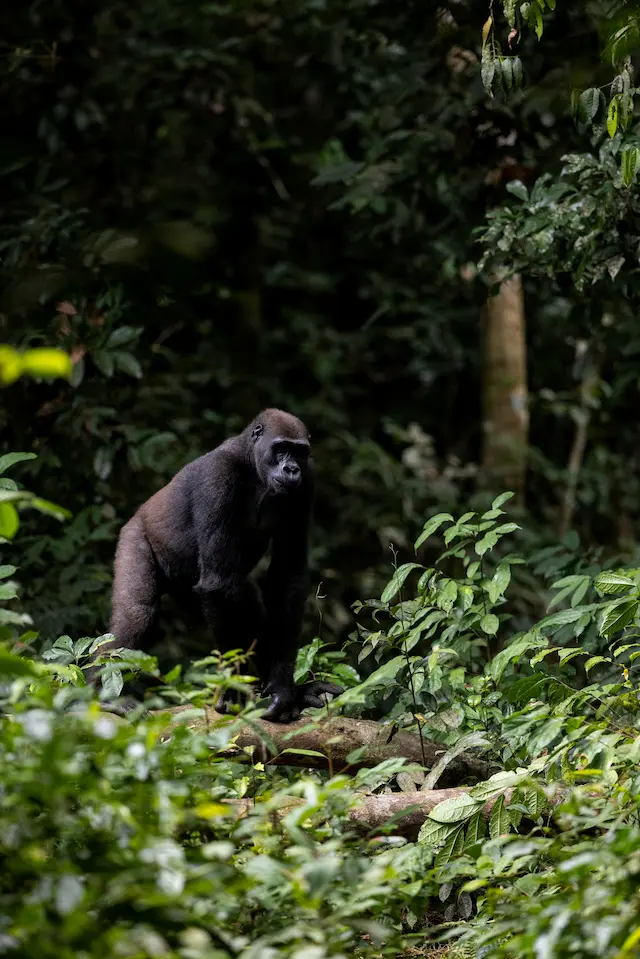
Without warning, the silverback emerged from the trees and stopped.
His arms folded across his chest like a king watching trespassers. He didn’t charge. He didn’t panic. He simply claimed his space. Wordless and breathless, we all stepped off the path and let him cross. It was the most powerful silence we have ever felt. A rush of sounds escaped the bush, and the researched notified us that the other family members had been startled by a duiker moments before our arrival. This made it challenging to locate them but slowly, they began to reassemble which was drawn by the silverback’s calm gravity
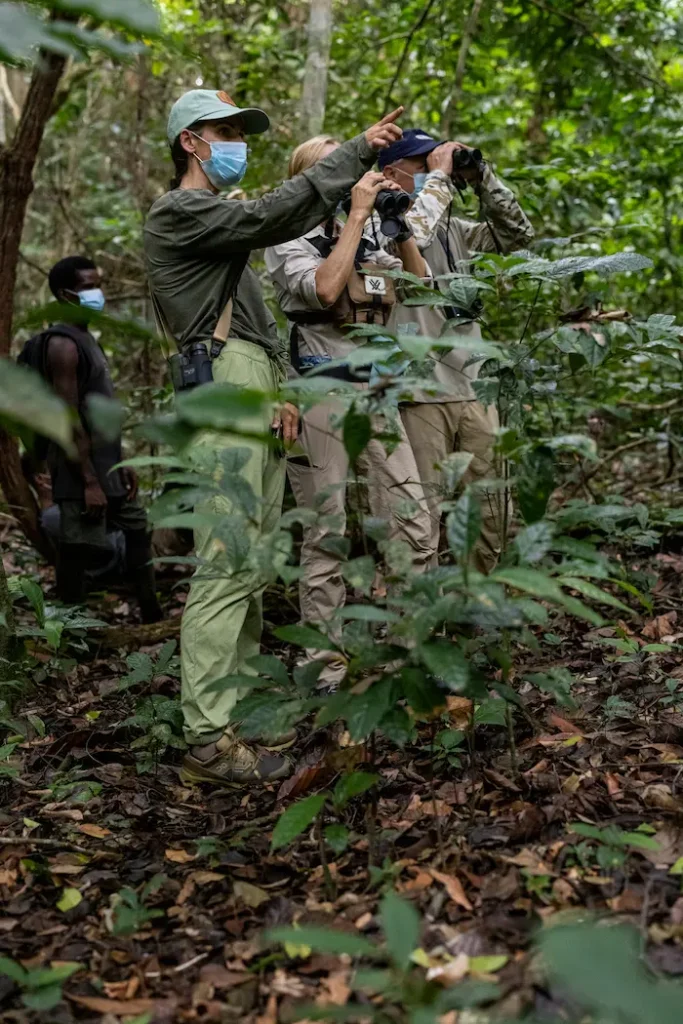
A sighting of a life time came to fruition within 15 minutes of us finding the family. Our researched alerted us to a female who had given birthday just days before our arrival. Gently easing her way through the pathway, the female appeared cradling the newborn. Its tiny hands curled against the mothers chest, seeking security from the two young, juveniles who chased each other through the undergrowth and wrestling like two teenagers in your grandparents living room.
Within a minute, a quiet decended through the bush, and there came the silverback moving right towards us. At barely a whisper, the researcher told us to “stay still, eyes down and do not move”. Motionless and within an arms reach away from my side, he forced behind us and paused, contemplating his next move. I could feel his prescence like a current, our finer hairs standing up when there is too much static in the air.
No agression, no fear, just an unmistakable message to us: I am real, and you are in my home.
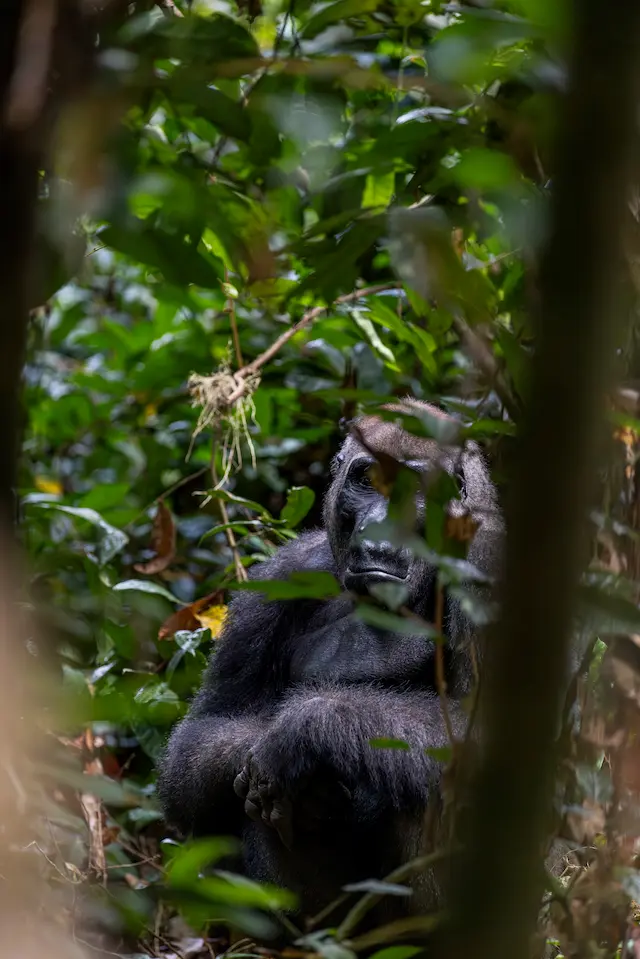
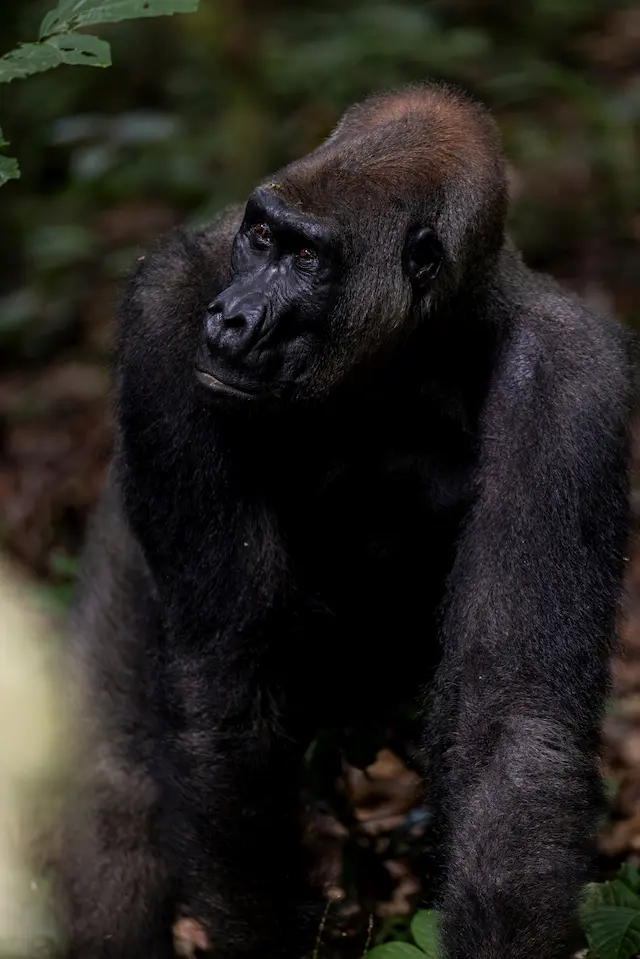
Time moves quickly when your senses and emotions are supercharged. Without realizing, our one hour visiting time had come to an end. With sweat-soaked masks and hearts that had just experienced something beyond words, we respectfully retreated back to the boat. Returning the way we came, but leaving feeling different, and grateful for the wild allowing us into their world for a brief moment.
If we’re lucky, these remote encounters will continue, because this isn’t just a story about gorillas, it is a story about what still exists, and how important it is to protect it.
SHARE:

Author: Reeds Bespoke
Dive into stories of unique destinations, insider knowledge, and expert advice that stir the imagination and ignite your wanderlust. Every page is an invitation to explore, guiding you toward the next unforgettable chapter in your travel story.
Related Articles
Wisdom from Ed Truter
Game Drive Etiquette
Loango National Park
The Time Is Now

Silvan Safari Lodge

Culinary Talk
magazine
Tags
RELATED ARTICLES