
WISDOM FROM ED TRUTER
Conservationist | Guide | Field Operations
Some understanding only comes from time spent paying attention.
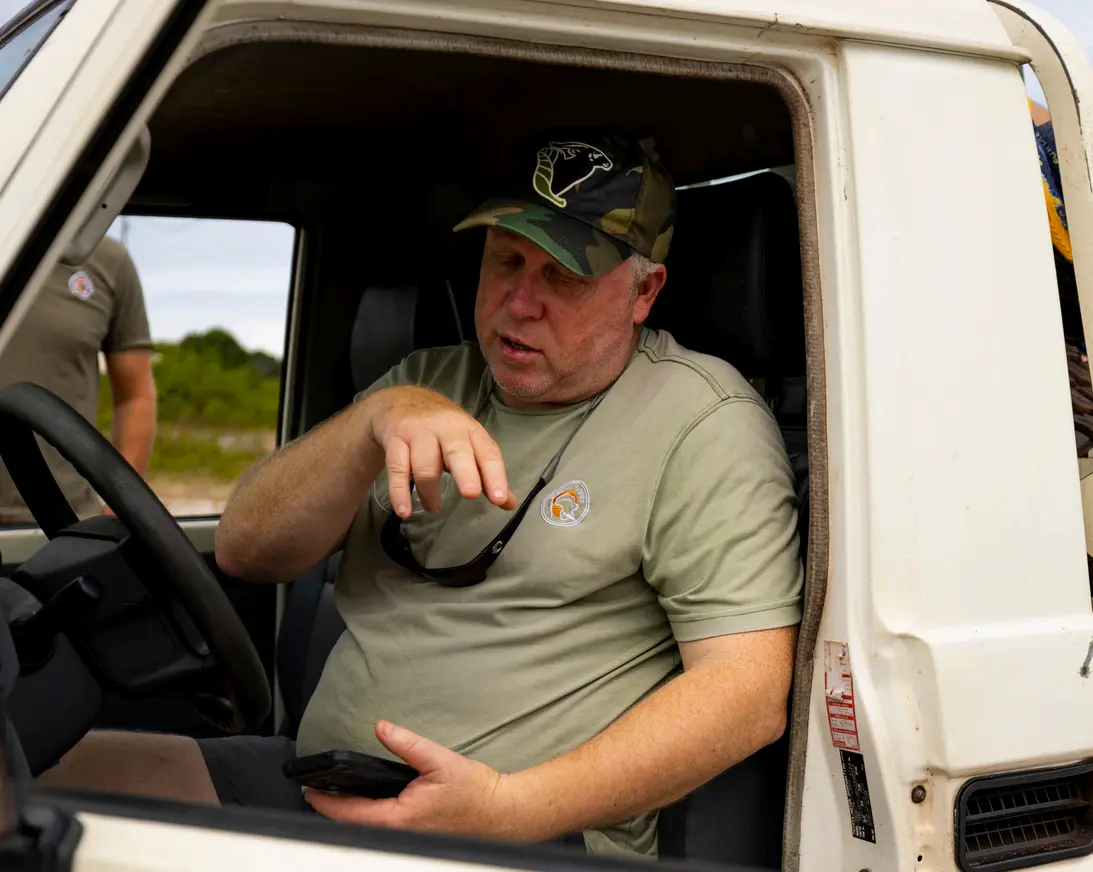
Ed Truter is South African, born and bred, and has spent most of his adult life working in wild places across Africa. Conservation, field operations, guiding — usually in fairly remote areas — have been the constant. Much of his work has sat at that uneasy intersection between people, wildlife, and long-term conservation, where ideals are tested quickly and theory rarely survives first contact with reality.
When asked to point to a single moment that changed his perspective, Ed pauses. He laughs slightly, not because the question is funny, but because it’s almost impossible.
“It’s actually quite a difficult question,” he says. “More difficult than a typical interview or podcast, because it’s so hard to isolate experiences.”
When you’ve spent years moving through these landscapes, moments don’t arrive neatly packaged. They accumulate. They overlap. They blur. But what stays with him, he explains, are the quieter realisations.
“You suddenly understand how small you are,” he says. “You’re in a system that’s been functioning perfectly without people for thousands of years, and you’re just passing through it.”
That perspective, once gained, doesn’t disappear. It informs how he works, how he moves, how he thinks about risk, about decision-making, about responsibility.
Conservation, he’s quick to point out, is rarely the romantic endeavour people imagine from the outside.
“It’s never straightforward,” he says. “And one of the hardest lessons is realising that caring isn’t enough.” There are politics to navigate, funding constraints, community dynamics, and competing priorities.
Decisions have consequences, and often there is no clean outcome. Those moments — when ideals meet reality- are some of the most difficult.
“But they shape how you work,” he continues. “You become more pragmatic. You listen more. You stop thinking in absolutes.”
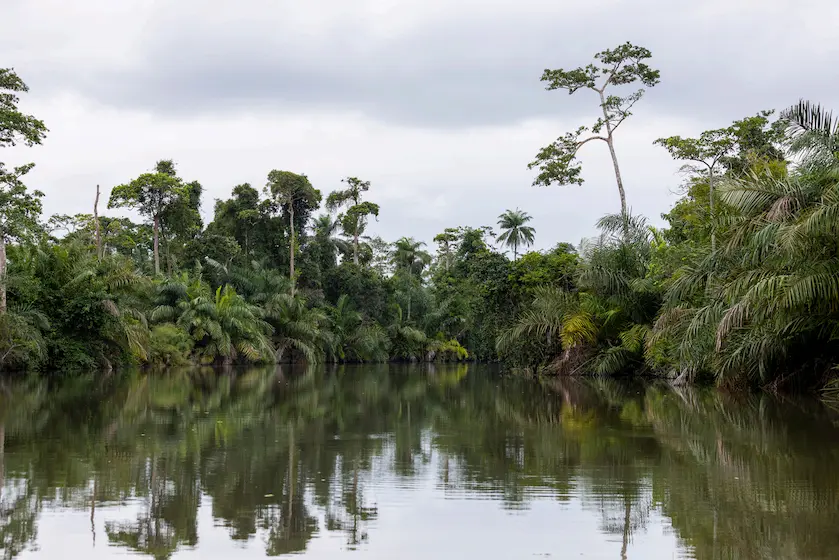
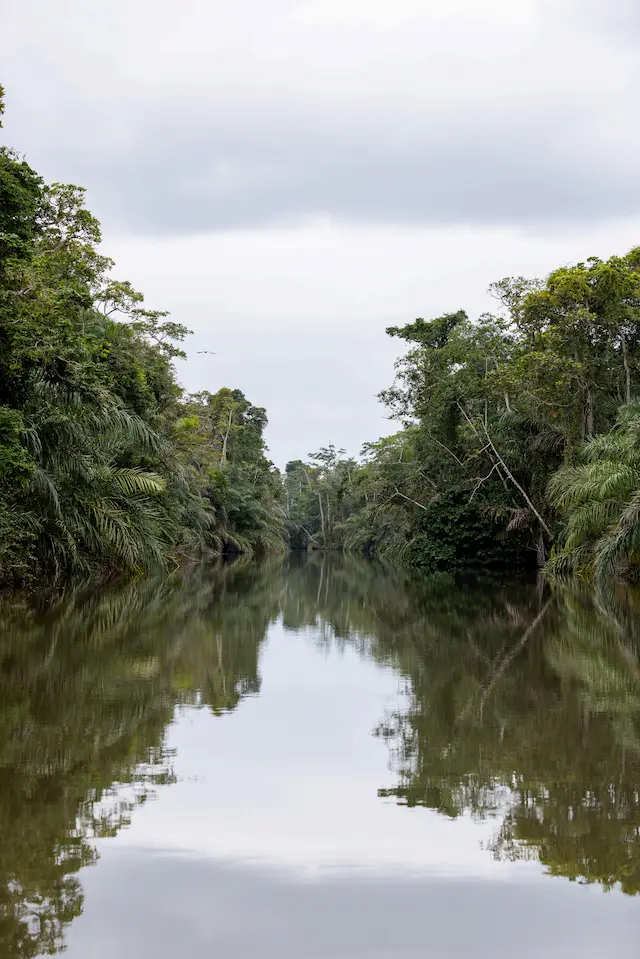
And perhaps most importantly, you learn that conservation is as much about people as it is about wildlife — whether that’s comfortable or not. Rivers, for Ed, have always been a touchstone. He speaks about them not romantically, but honestly. “They don’t lie,” he says. “If a river is healthy, you don’t usually have to look very far to see that everything around it is working too.”
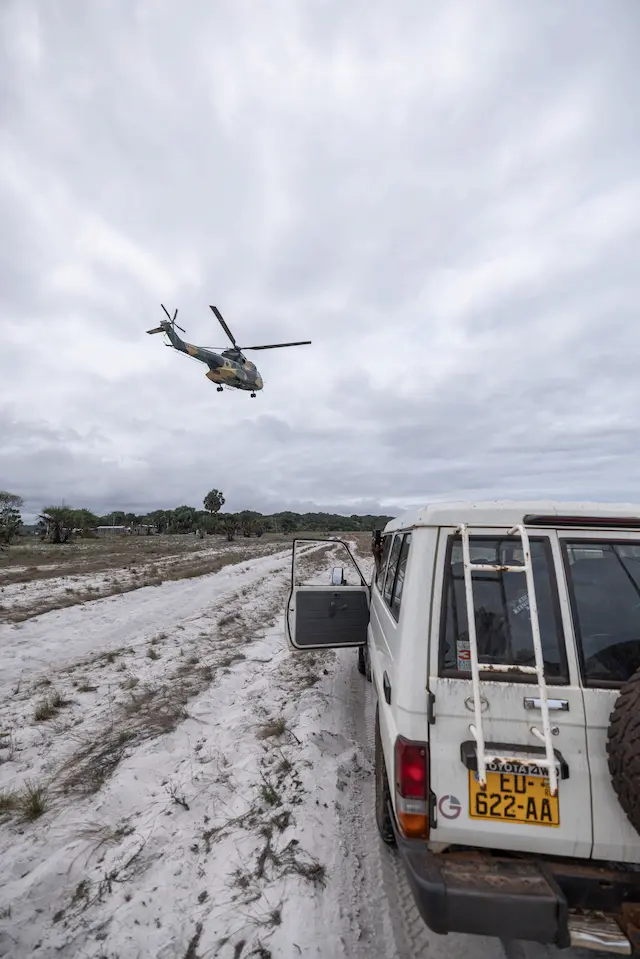
Conservation, is rarely the romantic endeavour people imagine from the outside.
Certain species become important not because of the fishing alone, but because of what they represent: intact habitat, resilience, balance. For Ed, fishing has never really been about the catch.
“It’s about understanding where you are,” he says. “Understanding how that system works.”
That same attention to systems extends beyond water. When asked about places in Africa that the world still doesn’t fully appreciate, he doesn’t hesitate.
“There are huge areas that never make it into the spotlight,” he says. “But they’re absolutely critical.” Often they’re working landscapes, places where people and wildlife still coexist, sometimes uneasily, sometimes in balance. They don’t always photograph well. They don’t always look dramatic. “But once you spend time there,” Ed says, “you realise how important they are, and how vulnerable.”
Storytelling, in that context, becomes essential. “Data is important,” he says. “Obviously. But it doesn’t move people on its own.”
People need emotional connection. They need to care. And storytelling, when done honestly, allows people to connect with places they may never see for themselves.
“The danger,” he adds, “is turning it into a spectacle. If you avoid that, storytelling can actually lead to real support for conservation.”
Then there are the moments that humanise the work — the stories that live somewhere between humour and discomfort. Food, unsurprisingly, brings those out quickly.
“There have been some incredible meals,” Ed says. “Simple food. Local food. Shared with people who are proud of what they’re offering.”
But not all food memories are quite so comforting. “In Burkina Faso,” he says, laughing now, “we were eating frogs. Big frogs. Their legs were like drumsticks — honestly, like partridges.”
They were cooked whole, eaten communally, entirely normal in context — and deeply confronting if you weren’t expecting it.
“And then there were the giant land snails,” he adds. “They cut them up, put them on skewers. You eat what’s put in front of you. Sometimes curiosity gets the better of you.”
Some of those meals are unforgettable for the right reasons. Others… less so. But all of them become part of the story you carry.
It’s the same with people. Over decades of travel, Ed has crossed paths with countless characters, but some of the most influential wouldn’t describe themselves as conservationists at all.
“They’ve just lived there their whole lives,” he says. “They’ve watched things change. They understand their environment in a way that no report ever will.”
Those conversations stay with him — grounded, practical, earned through observation rather than theory.
Africa’s wilderness, he says, reflects that same complexity. “It’s mixed,” he explains. “Some areas are doing incredibly well, especially where communities are genuinely involved and benefiting.”
Other places are under increasing pressure — development, population growth, short-term decision- making.
“The next ten years are going to be critical,” he says. “There are reasons to be optimistic. But only if decisions are made carefully and realistically.”
When asked where he would go if he had just one expedition left, Ed doesn’t romanticise it. “Somewhere remote,” he says. “Definitely.”
Not to tick boxes. Not to chase anything specific. Just immersion — time, understanding, minimal impact. “Nature is still boss,” he says. “Always.”
For those hoping to follow a similar path, his advice is simple, and hard-won.
“Be patient. Be humble. Listen more than you speak.” This work, he says, isn’t about ego. It’s about responsibility. And if you’re willing to learn — especially from the people who live closest to the land — you stand a far better chance of doing something that actually matters.
- edwardtruter

Author: Reeds Bespoke
Dive into stories of unique destinations, insider knowledge, and expert advice that stir the imagination and ignite your wanderlust. Every page is an invitation to explore, guiding you toward the next unforgettable chapter in your travel story.
Related Articles
Game Drive Etiquette
Max Planck Institute’s Great Ape
Loango National Park

The Time Is Now

Silvan Safari Lodge

Culinary Talk
magazine
Tags
RELATED ARTICLES